
As borders harden, the world's busiest crossing learns to slow down
A new inspection regime has added eleven minutes to every lorry's crossing time, and freight operators on both sides are rebuilding schedules around queues they once treated as exceptional.

2 min read
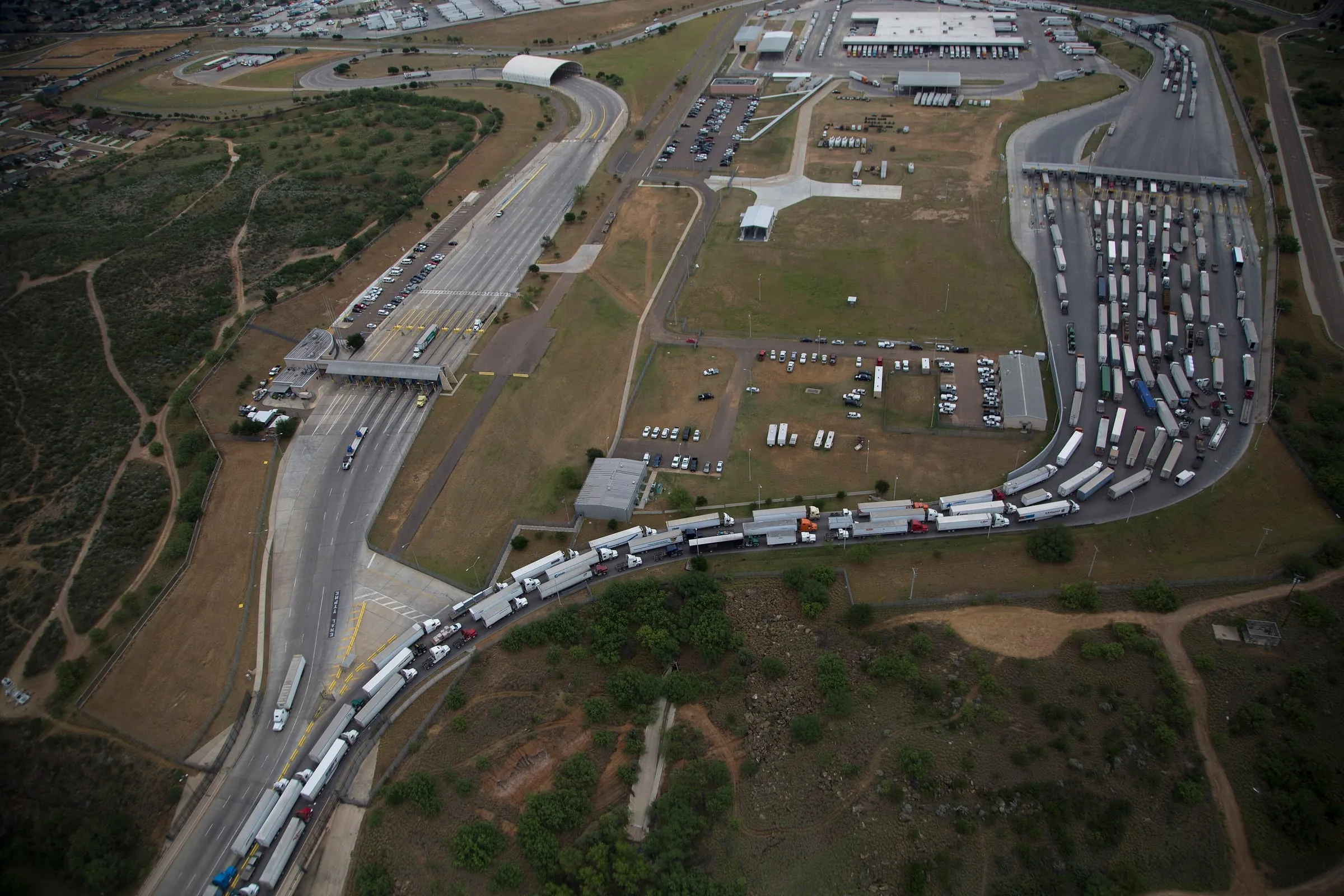
At six in the morning the queue of lorries already stretches past the second bend of the approach road, and the drivers at its tail know they will not reach the inspection booths before ten. Eighteen months ago the same wait was rarely more than an hour.
Nothing dramatic happened in between. There was no closure, no strike, no single decision that turned the world’s busiest land freight crossing into a bottleneck. Instead, both governments added checks, each defensible on its own terms, and the minutes accumulated.
Where the time goes
Customs officials count it precisely. A new requirement to scan every refrigerated trailer adds four minutes. A documentary check on the origin of steel and aluminium components adds three. A random secondary inspection, now applied to one lorry in eight rather than one in twenty, adds an average of four more across the whole flow.
Eleven minutes per vehicle sounds modest. Multiplied across roughly fourteen thousand crossings a day through twenty-two lanes, it means the crossing now runs at capacity for most of the working day, and any disruption, a broken scanner or a shift change that runs late, ripples into queues that take until midnight to clear.
How operators are adapting
Freight companies have stopped treating the delay as an anomaly and started building it into the timetable. Several large carriers now dispatch from inland depots in the early hours to reach the crossing before the morning peak. Others have moved assembly work to the near side of the border so that fewer finished goods need to cross at all.
Security policy is set in two capitals, but it is paid for in diesel at four in the morning.
That was the view of a freight association representative who has spent the past year lobbying both governments for a trusted-trader lane. The idea is simple: carriers that submit full cargo data in advance and accept periodic audits would bypass most of the new checks.
What happens next
A pilot of that lane opens in September with forty approved companies. Officials on both sides say it could absorb a fifth of the daily traffic within a year if it works, though neither government has committed to the extra staff needed to audit the participants.
The more uncomfortable question is whether the crossing’s new pace is temporary. Every check added since last year was presented as a response to a specific concern. None has yet come with a date on which it will be reviewed.